
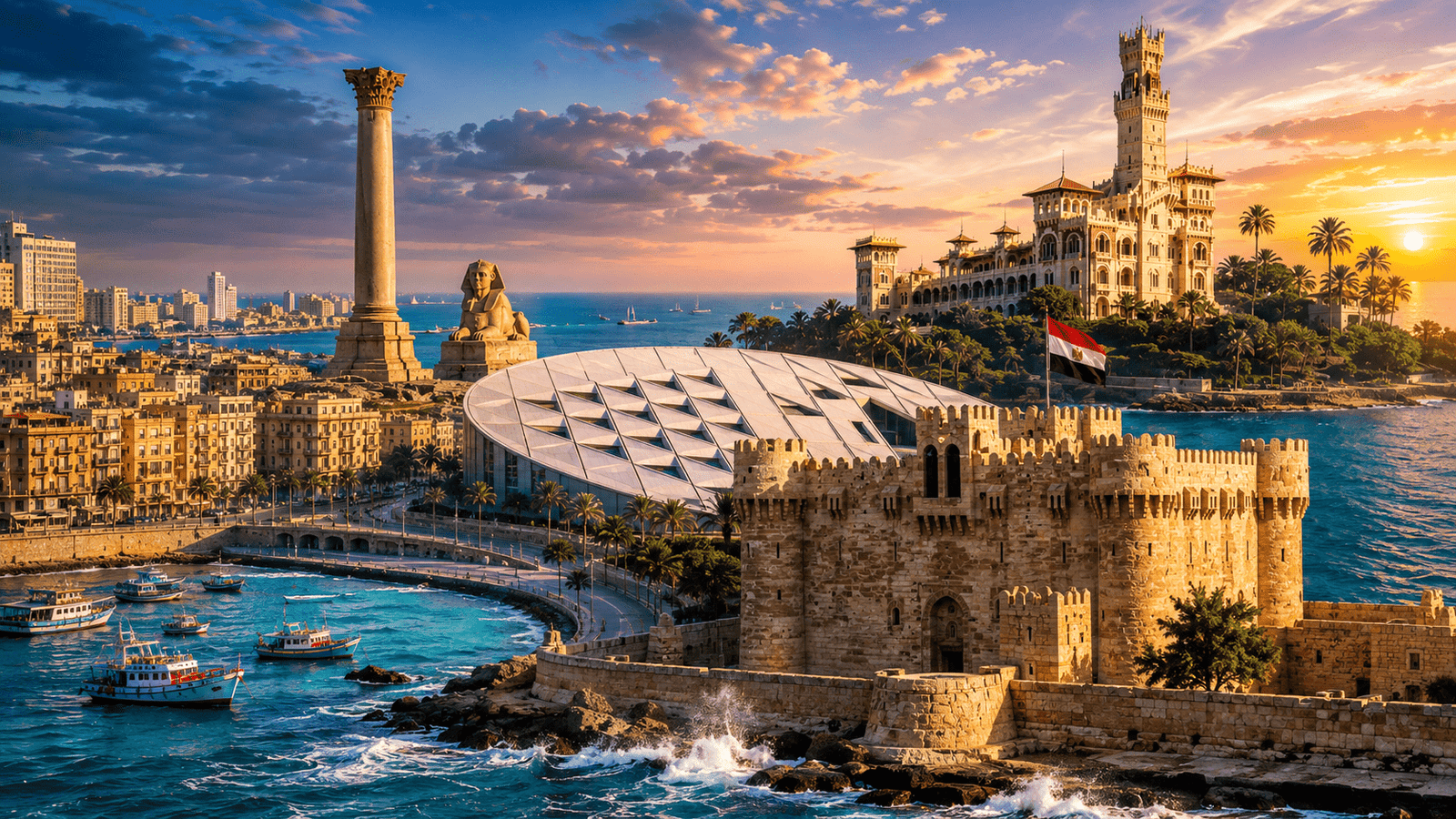
Alexandria Travel Guide: Best Attractions, Beaches & History
Plan a better Alexandria trip with a practical guide to the city’s ancient landmarks, Mediterranean waterfront, beaches, museums, local food, historic neighborhoods, transportation, and the experiences that are genuinely worth your time.
Looking for an Alexandria travel guide that tells you what to actually do, rather than giving you another long list of monuments? Alexandria is one of Egypt’s most rewarding city breaks when you understand how to combine its ancient history with the Mediterranean coast, local neighborhoods, museums, cafés, seafood, and the slower rhythm of life by the sea.
The biggest mistake first-time visitors make is treating Alexandria as a smaller version of Cairo or as a simple day trip built around two or three famous sights. The city is different. Its appeal comes from the contrast between what survives from the ancient world and what you can still experience in everyday Alexandrian life: a long waterfront, busy streets, old cafés, fishing boats, seafood restaurants, beaches, and neighborhoods shaped by Greek, Roman, Arab, Ottoman, European, and modern Egyptian influences.
This guide is built around the questions travelers usually need answered before booking: What are the best things to do in Alexandria? How many days should you stay? Can you visit from Cairo in one day? Which historical sites are worth prioritizing? Where are the best beaches? What should you eat? How do you get around? And when is the best time to visit?
Alexandria was founded by Alexander the Great in 331 BC and later became the capital of Ptolemaic Egypt. Under the Ptolemies, it developed into one of the most important cities of the ancient Mediterranean, associated with the famous Pharos Lighthouse, the ancient Library of Alexandria, the Mouseion, royal palaces, temples, and major intellectual activity. Much of that ancient city disappeared or lies beneath modern Alexandria, but its story remains visible in archaeological sites and underwater discoveries
Modern Alexandria adds another layer. The city is not a museum preserved behind glass. It is a living Mediterranean city where history and ordinary life sit side by side. That is why the best visit usually includes both major attractions and unstructured time along the Corniche.
If you have only one day, focus on the central historic sights and the waterfront. If you have two days, add museums, beaches, or a slower local-food experience. For travelers who enjoy history, architecture, photography, and coastal cities, two nights can make Alexandria feel much more complete.
Why Visit Alexandria?
Alexandria offers a type of Egypt experience that is difficult to reproduce elsewhere in the country. Cairo is defined by its enormous urban scale and Pharaonic treasures. Luxor is dominated by temples, tombs, and the landscape of ancient Thebes. Alexandria feels more Mediterranean: the sea is always part of the city, and the historical story stretches from the Hellenistic world through Roman and later periods to modern Egypt.
For travelers who want more than ancient Egyptian monuments, this difference matters. You can spend the morning exploring a Roman archaeological site, eat fresh seafood for lunch, walk beside the Mediterranean in the afternoon, and finish the day in a traditional café. The attractions are important, but the atmosphere between them is part of the destination.
Ancient & Roman Heritage
Alexandria preserves important archaeological remains from its Greek, Ptolemaic, Roman, and later history, including underground tombs, theatres, temples, and monumental remains.
Mediterranean Atmosphere
The Corniche, sea views, beaches, harbor areas, and waterfront cafés give the city a coastal character that feels very different from inland Egypt.
Local Food & Daily Life
Alexandria is especially appealing to travelers who enjoy seafood, bakeries, cafés, street scenes, and discovering how locals actually use the city.
A City for Curious Travelers
Alexandria rewards curiosity more than checklist tourism. Some of its most interesting stories are not immediately visible. The modern city was built over layers of older settlements, while parts of the ancient waterfront and harbor remain underwater. Archaeological research has revealed substantial submerged remains around the Eastern Harbour and the area associated with the ancient Pharos.
This is also why expectations matter. Do not arrive expecting the ancient Library of Alexandria or the original Pharos Lighthouse to still stand exactly as they did in antiquity. They do not. Instead, Alexandria asks you to understand the city through the remains that survived, the museums that interpret them, and the modern landscape that grew around them.
The strongest Alexandria experience often comes from connecting the attractions rather than visiting them as isolated stops. Think of Qaitbay as the story of the ancient Pharos and the medieval coastline, the Bibliotheca as a modern expression of Alexandria’s intellectual identity, and the Roman sites as evidence of how multicultural the city became. Together, they tell a much richer story.
Alexandria at a Glance
Before deciding how long to stay, it helps to understand the shape of the experience. Alexandria is large and busy, but many of the attractions travelers want to see can be arranged into practical sightseeing clusters.
What Is Alexandria Best Known For?
International visitors usually associate Alexandria with the ancient Library of Alexandria, the Pharos Lighthouse, Cleopatra and the Ptolemaic period, Qaitbay Citadel, and the Mediterranean Sea. Some of these are surviving monuments; others survive through archaeological evidence, historical records, or modern institutions.
The city’s most visible landmark today is Qaitbay Citadel, a fifteenth-century Mamluk fortress built between 1477 and 1479 on the site associated with Alexandria’s ancient lighthouse. The Ministry of Tourism and Antiquities describes it as one of the most important fortifications on Egypt’s Mediterranean coast.
Another essential stop is the Bibliotheca Alexandrina, the modern library and cultural complex opened in the spirit of Alexandria’s ancient intellectual tradition. The complex includes the main library, specialized libraries, museums, a planetarium, research centers, exhibitions, and cultural spaces.
- Ancient Mediterranean history and archaeology.
- Roman and Greco-Roman Egypt.
- Historic architecture and museums.
- Coastal walks and sea views.
- Seafood and traditional Egyptian food.
- Photography and urban exploration.
- Slow travel and local atmosphere.
If Alexandria is one stop within a larger Egypt journey, it works especially well as a contrast to the country’s major inland destinations. Start with the broader Egypt Travel Guide to understand how Alexandria can fit into a route that includes Cairo, Luxor, Aswan, the Red Sea, or the Western Desert.
How Many Days Do You Need in Alexandria?
For most first-time visitors, one full day is enough to see Alexandria’s headline attractions, but two days are better if you want to experience the city rather than simply tour it.
A day trip from Cairo can cover several important sights, especially with an early start and a well-organized route. However, the trade-off is that you spend much of the day moving between attractions. You may see the Citadel, the Catacombs, the Roman remains, and the Bibliotheca, but have little time for the waterfront, beaches, museums, cafés, or evening atmosphere.
One Day in Alexandria
A one-day itinerary should be selective. Prioritize two or three major historical attractions, add the Corniche, and leave enough time for lunch. Trying to visit every museum and archaeological site in one day usually makes the experience less enjoyable.
Two Days in Alexandria
Two days allow you to separate the western historic sights from the central cultural attractions. You can also include a longer waterfront walk, a museum, a beach stop, or a relaxed seafood meal without watching the clock constantly.
Three Days in Alexandria
Three days are ideal for travelers who prefer slow travel. You can explore the major monuments, spend time around the Corniche, visit Montaza, discover less-visited neighborhoods, and leave room for weather changes or spontaneous stops.
If Alexandria is your first visit and you are already traveling through Egypt, aim for two nights whenever your schedule allows. One night can work, but two nights give you much more freedom to experience the city at its own pace.
Alexandria History: From Alexander to Modern Egypt
Alexandria’s history is one of the main reasons the city feels different from other Egyptian destinations. Founded by Alexander the Great in 331 BC, it became the center of Ptolemaic rule after his death and grew into a major Mediterranean capital. The city combined Greek and Egyptian traditions while attracting scholars, merchants, sailors, artists, and political figures from across the ancient world.
The Ptolemaic period is closely associated with the city’s legendary intellectual institutions. The ancient Library and Mouseion helped create Alexandria’s reputation as a center of scholarship, while the Pharos Lighthouse became one of the defining structures of the ancient Mediterranean.
Yet the Alexandria visitors see today is not simply the ancient city preserved in place. Earthquakes, changing coastlines, political upheaval, urban development, and centuries of rebuilding transformed the landscape. Important ancient structures disappeared, while others survived underground or underwater.
A City Built in Layers
One of the most useful ways to understand Alexandria is to think vertically as well as horizontally. Modern streets can sit above archaeological remains, while ancient structures appear unexpectedly between ordinary buildings. The Catacombs of Kom El Shoqafa, Kom El-Dikka, the Serapeum area, and the underwater remains around the harbor each reveal a different part of the city’s long development.
The Ministry of Tourism and Antiquities identifies the Catacombs of Kom El Shoqafa as one of Alexandria’s most important surviving funerary complexes, notable for combining Egyptian, Greek, and Roman artistic traditions. It also identifies Kom El-Dikka as an archaeological area containing Roman and Byzantine remains, including a theatre and other structures.
Do not judge Alexandria’s historical importance by the size of what remains above ground. The city lost many of its most famous ancient monuments, but the archaeological record is still remarkably rich. A good guide or museum visit can make the surviving fragments much easier to understand.
Best Things to Do in Alexandria
Alexandria is easiest to explore when you group its attractions by location and theme rather than trying to follow a rigid checklist. The city has several major historical sites, but each one tells a different part of the story. Some are best for ancient history, others for architecture, museums, sea views, or simply understanding modern Alexandria.
If this is your first visit, the following attractions should form the backbone of your itinerary. You do not necessarily need to visit every one of them. Instead, choose the combination that matches your interests and the amount of time you have.
Qaitbay Citadel
The city’s signature fortress and one of the best places for Mediterranean views and the story of the ancient Pharos.
Bibliotheca Alexandrina
A modern cultural landmark inspired by Alexandria’s ancient reputation as a global center of knowledge.
Roman Alexandria
Explore catacombs, archaeological remains, theatres, columns, and evidence of the city’s multicultural past.
The key is balance. Spend part of your day underground or inside museums, then return to the open air and the Mediterranean. Alexandria becomes much more memorable when you experience both sides.
Qaitbay Citadel: Alexandria’s Most Iconic Landmark
If you have time for only one major attraction in Alexandria, Qaitbay Citadel is the easiest choice. Standing at the eastern edge of the harbor, the fortress combines medieval Egyptian architecture with one of the most important locations in the city’s ancient history.
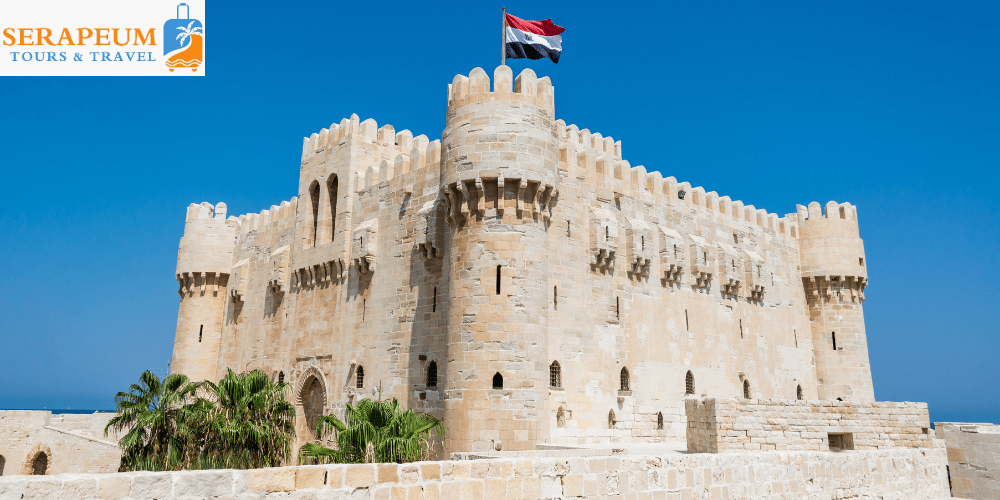
The citadel was built in the fifteenth century by Sultan Al-Ashraf Qaitbay. Its location is particularly significant because it occupies the area traditionally associated with the ancient Pharos Lighthouse, one of the Seven Wonders of the Ancient World.
The original lighthouse disappeared after a series of earthquakes, but the location remained strategically important. The fortress that replaced its presence on the waterfront gives modern visitors an opportunity to stand where Alexandria’s ancient maritime identity once began.
What Makes Qaitbay Worth Visiting?
- Excellent views across the Mediterranean and Alexandria’s harbor.
- A strong connection to the history of the ancient Pharos.
- Distinctive Mamluk military architecture.
- One of the city’s best photography locations.
- A natural starting point for exploring the western end of the Corniche.
Visit with enough daylight to see the relationship between the fortress, harbor, and open sea. The location is particularly rewarding when the weather is clear and the Mediterranean horizon is visible.
Allow roughly 60–90 minutes if you want to explore without rushing. Add more time if you enjoy photography or want to combine the visit with a longer walk around the surrounding waterfront.
Bibliotheca Alexandrina: The Modern Spirit of the Ancient Library
The Bibliotheca Alexandrina is more than a library. It is one of Alexandria’s defining modern landmarks and an important cultural complex built to revive the city’s historic connection with scholarship and knowledge.
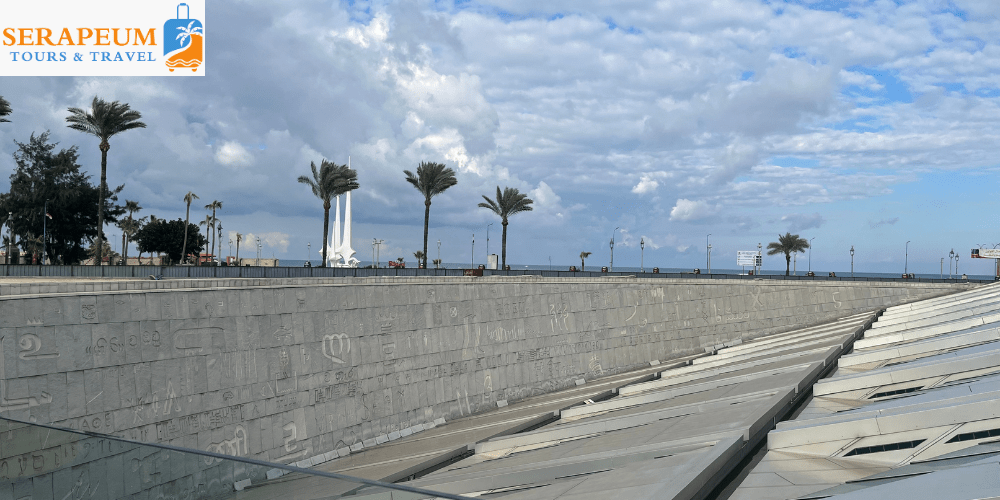
Its striking circular architecture faces the Mediterranean, creating one of the most recognizable modern silhouettes in the city. Inside, the complex includes library spaces, museums, exhibitions, cultural facilities, research centers, and educational institutions.
Travelers sometimes arrive expecting to see a reconstruction of the ancient Library of Alexandria. That is not what the building is. Instead, it is a modern institution inspired by the legacy of the ancient library and designed to serve contemporary readers, researchers, students, and visitors.
How Long Should You Spend There?
Give yourself at least 60–90 minutes for a meaningful visit. If you want to explore the museums or exhibitions in more detail, plan for longer.
Combine the Bibliotheca with a walk along the central Corniche. The contrast between the modern cultural complex, the Mediterranean waterfront, and the older urban fabric makes this one of the most interesting parts of an Alexandria itinerary.
Because cultural facilities can have changing opening schedules, exhibitions, and access arrangements, check the official visitor information before building your entire day around the library.
Catacombs of Kom El Shoqafa
The Catacombs of Kom El Shoqafa are among Alexandria’s most fascinating archaeological sites because they show how different cultural traditions could exist together in the same city.
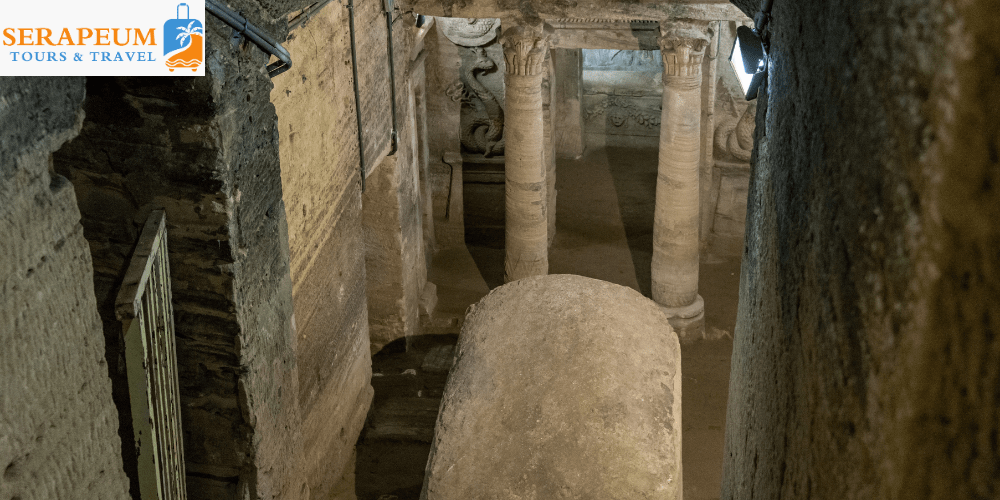
This underground funerary complex dates mainly to the Roman period and contains architectural and artistic elements that combine Egyptian, Greek, and Roman influences. The result is not a simple example of one culture replacing another. Instead, it reflects the multicultural character of Roman Alexandria.
Why Travelers Should Not Skip It
The catacombs provide something that many above-ground monuments cannot: a sense of discovery. You descend beneath the modern city and encounter chambers, passages, funerary spaces, and decorative details hidden below street level.
The atmosphere is also completely different from the open waterfront. That contrast makes the catacombs an excellent addition to a day that already includes Qaitbay or the Corniche.
The underground setting can feel confined, and visitors who are uncomfortable in enclosed spaces should take that into account. Wear comfortable shoes because the experience involves walking and stairs.
Pompey’s Pillar & the Serapeum
Despite its famous name, Pompey’s Pillar is not actually connected to the Roman general Pompey. The enormous red granite column was erected in Alexandria during the Roman period and is associated with the Serapeum, a major religious complex dedicated to the god Serapis.
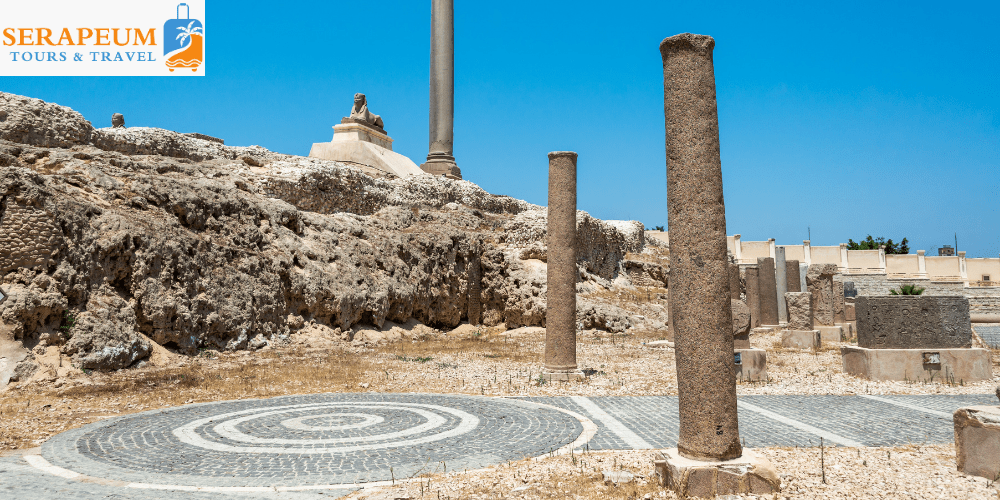
The surviving column is impressive partly because of its scale and partly because of what it represents. It is one of the most visible remains of ancient Alexandria above ground and offers a useful introduction to the city’s Roman religious landscape.
The Serapeum Connection
The Serapeum was one of Alexandria’s important religious centers. Its history also connects with the broader story of the ancient city’s intellectual and religious institutions.
Travelers interested in the history of Alexandria should look beyond the column itself. The surrounding archaeological area helps explain how religious monuments were integrated into the ancient urban landscape.
The column takes only a few minutes to photograph, but the archaeological context is what makes the site valuable. Give yourself enough time to look around and understand what once stood here.
Kom El-Dikka: Roman Alexandria Beyond the Famous Column
Kom El-Dikka is one of the best places to understand that Roman Alexandria was a functioning city rather than simply a collection of temples and monuments.
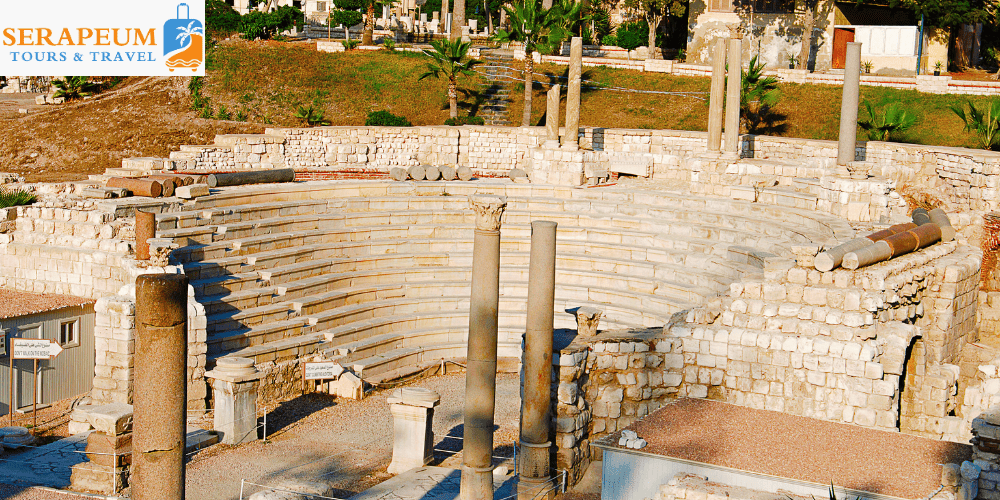
The archaeological area contains remains associated with everyday urban life, including a Roman theatre and other structures discovered through excavations. Its importance lies partly in the fact that it provides a broader picture of how people used the city.
If your interest is archaeology, Kom El-Dikka deserves more attention than its relatively modest appearance might suggest. Alexandria’s most famous ancient monuments were often spectacular, but sites like this help reconstruct the ordinary urban environment around them.
- Roman history.
- Archaeology enthusiasts.
- Travelers who want more than famous photo locations.
- Understanding the layout and daily life of ancient Alexandria.
Greco-Roman Museum
Alexandria’s Greco-Roman heritage is one of the strongest reasons to spend more than a few hours in the city. The Greco-Roman Museum is particularly useful for travelers who want historical context before or after visiting the archaeological sites.
Its collections focus on the period when Alexandria and Egypt were deeply connected to the wider Greek and Roman Mediterranean world. The museum helps visitors see how Egyptian traditions interacted with Greek and Roman culture over centuries.
For many travelers, this is where scattered archaeological impressions begin to make sense. Instead of seeing a column, tomb, or ruined structure as an isolated object, you start to understand the cultural environment that produced it.
If museums are important to you, place the Greco-Roman Museum before several archaeological stops. The historical context can make the rest of your sightseeing considerably more rewarding.
Alexandria National Museum
Alexandria National Museum is another useful stop for travelers who want a broader view of the region’s history. Rather than focusing on only one period, the museum presents material connected with different stages of Egyptian history.
The museum is housed in a restored historic villa, adding architectural interest to the visit. Its collections help connect Alexandria’s ancient, Islamic, and later history with the wider story of Egypt.
This makes it particularly useful for first-time visitors who have limited knowledge of Egyptian history. It can provide a chronological framework that helps you understand why Alexandria became such a complex cultural crossroads.
Walk the Alexandria Corniche
The Corniche is not a traditional attraction with an entrance ticket, but it is one of the experiences that best defines the city.
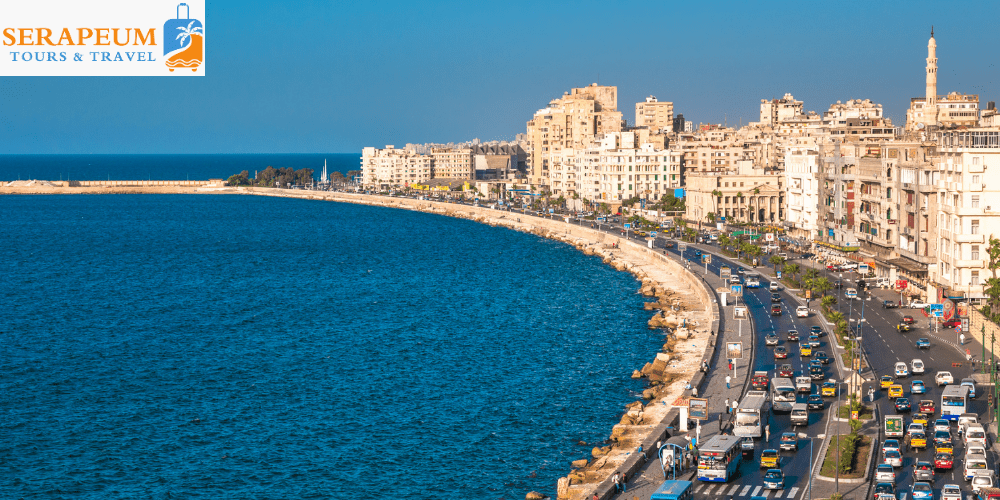
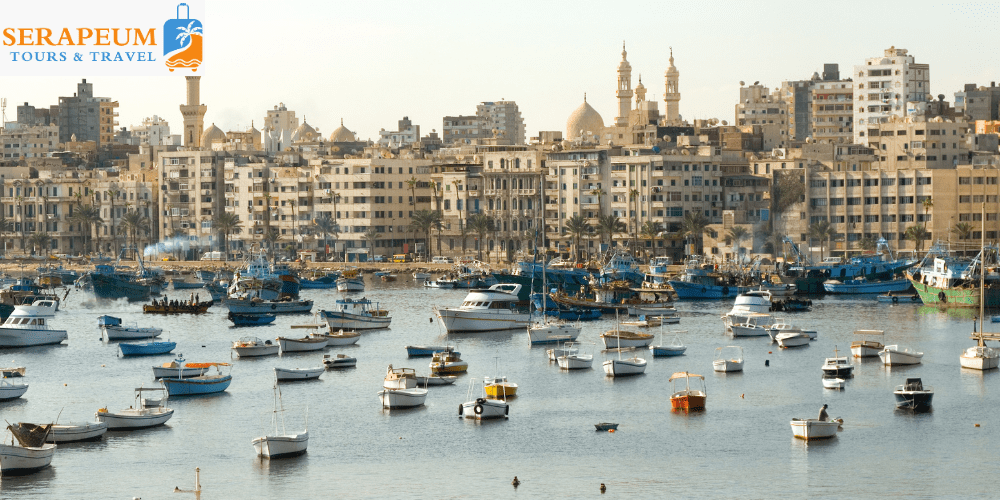
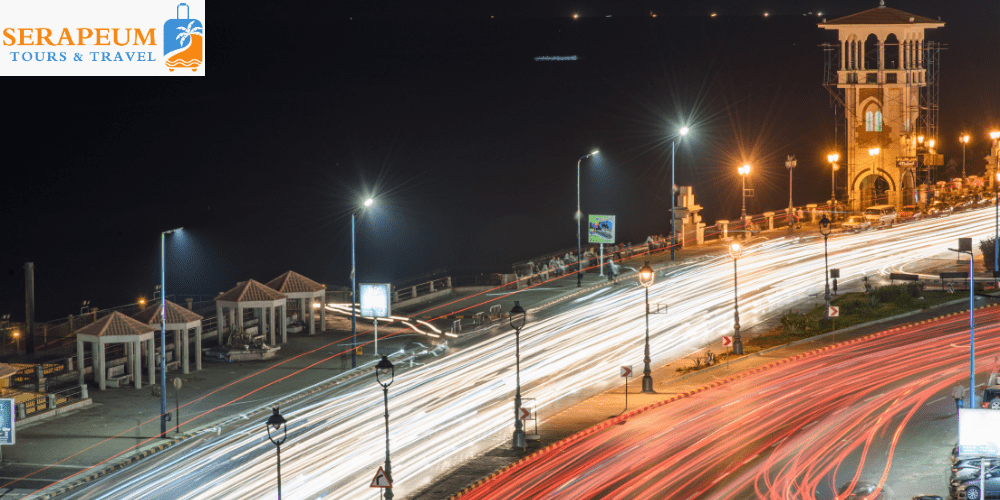
Stretching along the Mediterranean, the waterfront connects neighborhoods, cafés, restaurants, beaches, viewpoints, and historic areas. It is where Alexandria feels least like an archaeological destination and most like a living Mediterranean city.
A walk along the Corniche can be as simple as watching fishing boats and the waves, stopping for coffee, taking photographs, or sitting near the sea while the city moves around you.
When Is the Best Time for a Corniche Walk?
Late afternoon and early evening are usually the most enjoyable periods for a relaxed waterfront walk, particularly outside the hottest months. The light becomes softer, temperatures tend to improve, and the Corniche becomes part of Alexandria’s evening social life.
Do not schedule every minute of your trip. Leave at least one open block for the Corniche. This is often where the city becomes more memorable than the itinerary suggested.
Best Beaches in Alexandria
Alexandria’s Mediterranean setting naturally makes beaches part of the travel experience. However, beach conditions, cleanliness, crowd levels, facilities, and water quality can vary by season and by location.
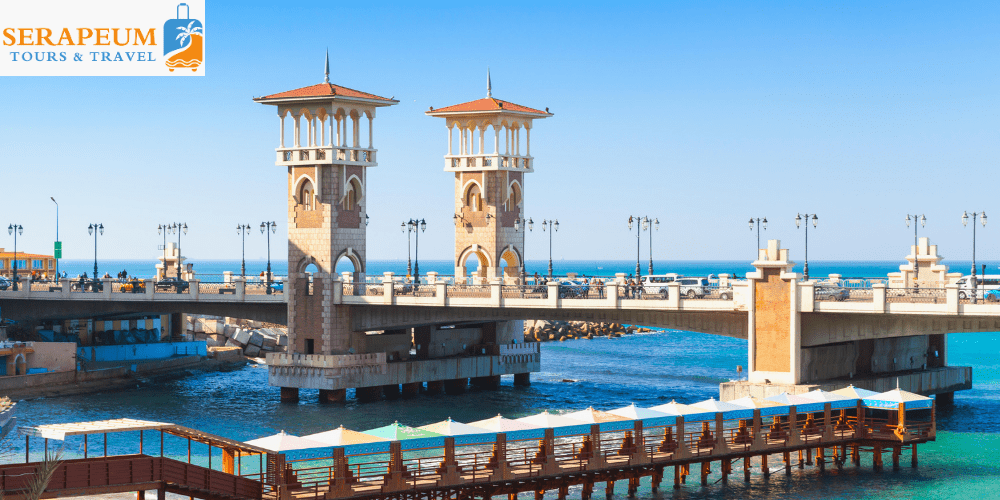
Travelers should therefore think about beaches differently from archaeological attractions. You are choosing a place for the atmosphere, facilities, swimming conditions, and type of day you want rather than simply searching for the single “best beach.”
Montaza Area
The Montaza area is one of the most recognizable coastal parts of Alexandria. It combines sea views, landscaped spaces, historic royal architecture, and access to the coast.
Private and Resort-Style Beaches
Travelers who prioritize facilities, organized seating, changing areas, or a more controlled beach environment may prefer private beach clubs or resort-style facilities. Prices and access rules vary, so confirm current conditions locally before planning a full beach day around one property.
Public Beaches
Public beaches can offer a more local experience and may be considerably more affordable. They can also become busy, especially during summer weekends and holidays.
If swimming is not your main goal, consider treating the coast as a scenic part of your itinerary instead. A waterfront walk, sea-view meal, or visit around Montaza can give you the Mediterranean experience without committing an entire day to the beach.
Montaza Palace & Gardens
Montaza is a natural choice for travelers who want a change of pace after archaeological sightseeing. The area is associated with Egypt’s former royal family and combines historic architecture, gardens, and a dramatic coastal setting.
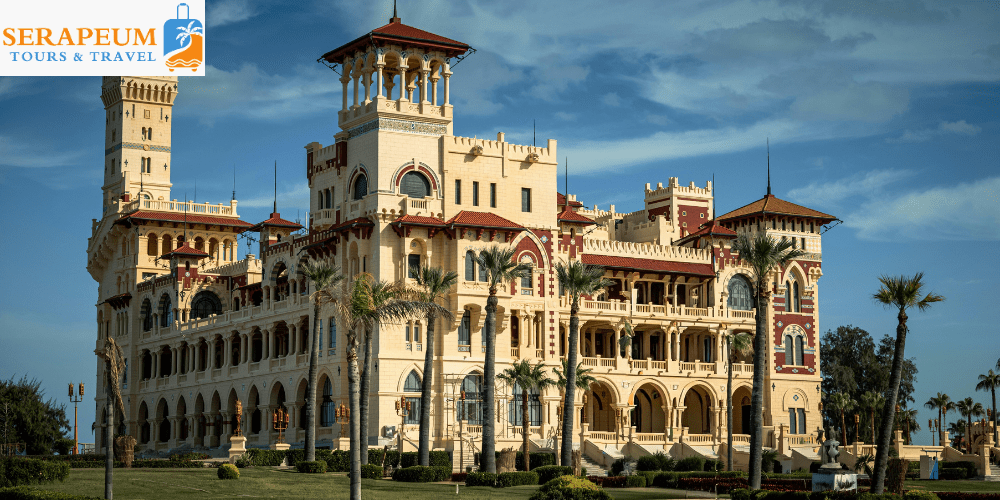
The attraction is less about one isolated monument and more about the overall landscape. You can move from historic architecture to greenery and then back toward the Mediterranean, making it particularly pleasant for travelers who need a slower afternoon.
Montaza also works well for photography. The combination of gardens, palace architecture, paths, and sea views provides a different visual character from the dense historic center.
- Couples looking for a relaxed coastal stop.
- Families who want open outdoor space.
- Photographers.
- Travelers staying two or more days in Alexandria.
What to Eat in Alexandria
Food should be part of an Alexandria itinerary, especially if you enjoy seafood. The city’s coastal location has shaped a strong seafood culture, but there is much more to try than fish alone.
Alexandrian Seafood

Look for locally prepared fish, shrimp, calamari, crab, and mixed seafood dishes. Depending on the restaurant, fish may be grilled, fried, baked, or cooked with sauces and spices.
Ful, Falafel & Egyptian Breakfast
For a cheaper local meal, try Egyptian staples such as ful medames and ta’ameya, the Egyptian style of falafel traditionally made with fava beans. These are especially useful for travelers who want an inexpensive breakfast or quick meal.
Alexandrian Liver Sandwiches
Kebda Eskandarani, or Alexandrian-style liver, is another local specialty. It is commonly prepared with spices, garlic, peppers, and other seasonings and served in bread as a casual street-food meal.
Local Desserts & Bakeries
Egyptian bakeries and dessert shops are worth exploring as well. Try traditional sweets and pastries rather than limiting your food experience to hotel restaurants.
For seafood, choose busy restaurants with strong local traffic and good food turnover. Ask about the price of seafood by weight before ordering when applicable, and make sure you understand whether side dishes and service charges are included.
Where to Eat in Alexandria
Alexandria has a wide range of places to eat, from simple local restaurants to polished seafood venues with Mediterranean views. The best choice depends less on finding a single famous restaurant and more on choosing the right area and style for your meal.
Seafood Restaurants
For the classic Alexandria food experience, prioritize a restaurant specializing in fresh seafood. Ask to see the available fish before ordering when the restaurant sells seafood by weight, and confirm the cooking method and approximate price.
Restaurants around the waterfront can offer excellent views, but a sea view does not automatically mean better food. Busy local restaurants away from the most tourist-oriented areas can sometimes provide a more authentic dining experience.
Casual Local Food
For an inexpensive meal, look for places serving ful, ta’ameya, koshari, Alexandrian liver, grilled chicken, and sandwiches. These meals are useful when you want to keep your sightseeing schedule flexible.
Cafés by the Sea
Alexandria is also a city for sitting down. A coffee or tea beside the Mediterranean can be more memorable than adding another attraction to an already crowded itinerary.
Before choosing a restaurant, check recent reviews, opening hours, menu prices, and whether reservations are needed. Restaurant quality, prices, and operating hours can change, so avoid relying only on an old travel recommendation.
Alexandria Transportation Guide
Getting around Alexandria is manageable, but traffic can be slow and distances can be deceptive. The city stretches along the coast, and moving from one end to another can take considerably longer during busy periods.
The best transportation strategy is therefore to group attractions geographically. For example, Qaitbay, the western harbor area, and nearby waterfront sights can be combined, while Montaza belongs in a separate eastern section of the itinerary.
🚕 Taxis and Ride-Hailing
Taxis and ride-hailing services are useful for visitors because they remove much of the uncertainty involved in navigating unfamiliar streets. They are particularly practical when carrying luggage or traveling between attractions that are not conveniently connected.
Traffic can be heavy, especially during peak periods. Allow extra time when you have a train, airport transfer, or scheduled tour.
🚋 Alexandria Tram
Alexandria’s tram network is part of the city’s identity and can be an interesting way to experience local transportation. However, service conditions, routes, and operating arrangements can change, so visitors should check current local information before relying on the tram for a time-sensitive journey.
🚆 Cairo to Alexandria by Train
For travelers coming from Cairo, the train is one of the most practical options. Alexandria’s main railway station is Misr Station, also known as Alexandria Station.

Journey times depend on the service and schedule. Faster services can make Alexandria practical as a day trip, while travelers staying overnight can use the train to avoid the stress of returning to Cairo late at night.
Do not build your Alexandria itinerary around exact minute-by-minute travel times. Traffic and road conditions can change quickly. Give yourself a buffer, especially if your return journey to Cairo is already booked.
🚗 Private Car or Private Day Tour
A private vehicle can be worthwhile for travelers who have only one day and want to cover several attractions efficiently. It is also useful for families, small groups, and travelers who prefer door-to-door transportation.
If you are building a wider Egypt itinerary, compare the different transport and tour options through the site’s Egypt tours section rather than treating Alexandria as an isolated stop.
Where to Stay in Alexandria by Budget
Where you stay can change the entire feel of an Alexandria trip. Travelers who want historic sights and easy access to the waterfront should look toward the central Corniche and older central districts. Those who prefer quieter surroundings, gardens, and a resort-style atmosphere may prefer the Montaza area.
💰 Budget: Simple Local Hotels & Guesthouses
Budget travelers can find basic hotels and guesthouses around central Alexandria. The biggest advantage is location rather than luxury. A central property can save time and transportation costs when you are sightseeing on foot or using short taxi rides.
Before booking, pay close attention to recent reviews, air conditioning, bathroom standards, noise levels, Wi-Fi, and whether the room has the facilities you actually need.
🏨 Mid-Range: Comfortable City Hotels
Mid-range hotels are often the best compromise for first-time visitors. Look for a property with easy access to the Corniche, reliable air conditioning, good recent reviews, and convenient transportation.
✨ Higher-End: Waterfront & Resort-Style Stays
Travelers who value views and a more relaxed stay can consider higher-end hotels along the waterfront or around Montaza. These properties can be especially appealing for couples or travelers staying two or three nights.
- First visit: Central Alexandria and Corniche access.
- History: Stay where transportation to the western historic sites is easy.
- Beach time: Consider the eastern coastal areas.
- Relaxation: Montaza and resort-style properties.
- Budget: Prioritize location and recent guest reviews over hotel facilities you may not use.
How Much Does an Alexandria Trip Cost?
Alexandria can be relatively affordable compared with many international Mediterranean destinations, but your daily budget depends heavily on accommodation, transportation, restaurants, and how many paid attractions you visit.
Rather than using one fixed daily number, it is more useful to divide the budget into categories. Prices change over time and can vary significantly by season, exchange rates, and hotel category.
Accommodation
Your largest variable after international transportation. Budget hotels can be inexpensive, while waterfront and luxury properties can increase the daily cost substantially.
Food
Local Egyptian food can be very affordable. Seafood restaurants and premium waterfront dining will raise the average meal cost.
Transportation
Short taxi or ride-hailing journeys can be practical, but repeated cross-city trips add up quickly.
How to Save Money in Alexandria
- Stay close to the areas you plan to explore most.
- Eat some meals at local restaurants rather than relying on hotel dining.
- Use public transportation when practical and comfortable for you.
- Group nearby attractions to reduce transportation costs.
- Compare accommodation prices across several dates before booking.
- Check current attraction fees before finalizing your daily budget.
Avoid publishing or planning around old attraction prices found in outdated travel blogs. Egyptian ticket prices and opening arrangements can change. Verify the current cost shortly before your trip.
Best Time to Visit Alexandria
Alexandria has a Mediterranean climate, which makes it noticeably different from much of inland Egypt. Summers are generally hot and can be humid, while winters are milder but can bring periods of rain and unsettled weather.
For sightseeing, spring and autumn are usually the most comfortable seasons. These periods offer a useful balance between pleasant temperatures and the ability to spend long periods outdoors.
🌸 Spring: March to May
Spring is a strong choice for travelers who want comfortable sightseeing conditions without the peak heat of summer. It is a good period for walking the Corniche, visiting archaeological sites, and exploring the city on foot.
☀️ Summer: June to August
Summer can be hot and humid, but it is also the season when Alexandria’s coastal identity becomes especially attractive. If you are primarily interested in beaches and sea views, summer can work well. For extensive archaeological sightseeing, plan outdoor visits earlier in the day.
🍂 Autumn: September to November
Autumn is another excellent period for a city-focused Alexandria trip. Temperatures generally become more comfortable, making longer walks and outdoor sightseeing easier.
🌧️ Winter: December to February
Winter can be pleasant for travelers who prefer cooler conditions, but Alexandria receives more rain than many other Egyptian destinations. Pack accordingly and keep some flexibility in your itinerary.
Choose your travel season according to your priority. For archaeology and long walking days, favor the cooler months. For beach time and a stronger summer-seaside atmosphere, summer can be attractive if you are comfortable with heat and humidity.
Suggested 1, 2 & 3-Day Alexandria Itineraries
Alexandria in 1 Day
- Start early with the Catacombs of Kom El Shoqafa.
- Continue to Pompey’s Pillar and the Serapeum area.
- Have lunch at a local restaurant.
- Visit Qaitbay Citadel.
- Walk part of the Corniche.
- Finish with coffee or a seafood dinner near the waterfront.
This route prioritizes the city’s strongest historical experiences while leaving enough time to actually enjoy the waterfront.
Alexandria in 2 Days
- Catacombs of Kom El Shoqafa.
- Pompey’s Pillar and Serapeum.
- Kom El-Dikka.
- Lunch and local food.
- Qaitbay Citadel.
- Sunset or evening along the Corniche.
- Bibliotheca Alexandrina.
- Greco-Roman Museum or Alexandria National Museum.
- Relaxed lunch.
- Montaza area.
- Beach or waterfront café.
Alexandria in 3 Days
With three days, resist the temptation to simply add more monuments. Use the extra time to explore at a slower pace.
- Day 1: Main archaeological attractions and Qaitbay.
- Day 2: Bibliotheca, museums, Corniche, and local food.
- Day 3: Montaza, beaches, cafés, shopping, photography, or additional archaeological sites based on your interests.
A Cairo day trip is efficient for travelers with limited time. Staying overnight is better for travelers who want to experience Alexandria after the organized sightseeing period ends. The city feels different when you are no longer trying to catch the last train or vehicle back to Cairo.
Alexandria Pros & Cons
Pros
- Unique Mediterranean atmosphere.
- Rich Greek, Roman, and Egyptian history.
- Excellent seafood culture.
- Strong photography opportunities.
- Easy contrast with Cairo and Luxor.
- Good choice for travelers who enjoy independent exploration.
Cons
- Traffic can be unpredictable.
- Some attractions are spread far apart.
- Summer can be hot and humid.
- Winter rain can disrupt outdoor plans.
- Some ancient landmarks survive only as archaeological remains.
- Busy periods can make the waterfront crowded.
Common Tourist Mistakes in Alexandria
Alexandria is not difficult to visit, but several common planning mistakes can reduce the quality of the experience.
- Trying to see everything in one day.
Alexandria is large enough that rushing between attractions can turn a fascinating city into a transportation exercise. - Assuming the ancient lighthouse still exists.
Qaitbay Citadel stands on the historic site associated with the Pharos, but the ancient lighthouse itself is gone. - Expecting the modern Bibliotheca to be the ancient library.
The Bibliotheca Alexandrina is a modern institution inspired by Alexandria’s intellectual heritage. - Ignoring the Corniche.
Visitors who focus only on archaeological sites miss one of the city’s defining experiences. - Choosing a restaurant only because it has a sea view.
Location and food quality are not always the same thing. - Underestimating traffic.
Always allow extra time for transfers, especially when connecting with trains. - Visiting beaches without checking current conditions.
Beach facilities, access, crowd levels, and conditions can vary by season. - Building an itinerary with no flexibility.
Alexandria rewards spontaneous stops, especially along the waterfront.
Safety & Practical Tips for Alexandria
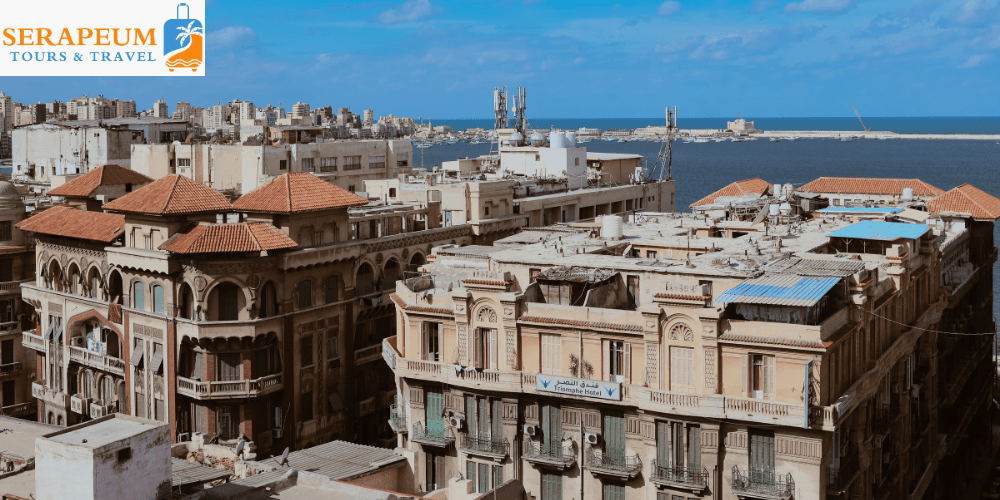
Alexandria is a major Egyptian city used to receiving domestic and international visitors. Normal urban travel precautions are still important, particularly in crowded areas and busy transportation hubs.
- Keep your phone, wallet, passport, and valuables secure in crowded places.
- Use reputable transportation providers and confirm the destination before starting a ride.
- Carry small amounts of Egyptian currency for minor purchases.
- Drink enough water, especially during warm weather.
- Use sunscreen and comfortable footwear for long sightseeing days.
- Follow local rules when photographing people, government facilities, or sensitive locations.
- Check weather conditions before planning a full beach or outdoor day.
- Keep digital and physical copies of important travel documents.
The most useful safety habit is situational awareness. Busy streets, traffic, informal vendors, and crowded attractions can feel intense if you are not used to them. Stay patient, keep your belongings close, and allow extra time.
Alexandria Packing Checklist
Your packing list should change with the season, but a few items are useful almost year-round.
- ☑ Comfortable walking shoes.
- ☑ Lightweight, breathable clothing for warm periods.
- ☑ A light jacket or sweater for cooler evenings.
- ☑ Compact umbrella or rain jacket in winter.
- ☑ Sunscreen and sunglasses.
- ☑ Reusable water bottle.
- ☑ Small day bag.
- ☑ Power bank for long sightseeing days.
- ☑ Copies of passport and travel documents.
- ☑ Modest clothing suitable for visiting religious and historic sites.
- ☑ Swimwear if beach time is part of your itinerary.
Alexandria vs Other Egyptian Destinations
Alexandria is very different from the classic Nile Valley destinations. It is not a replacement for Cairo, Luxor, or Aswan. Instead, it adds a Mediterranean dimension to an Egypt itinerary.
If your trip is short, the right question is not simply “Is Alexandria worth visiting?” The better question is whether its history, coastline, food, and atmosphere match what you want from your Egypt trip.
| Destination | Best For | Atmosphere | Ideal Stay |
|---|---|---|---|
| Alexandria | Mediterranean coast, Greco-Roman history, seafood | Coastal, urban, relaxed | 1–3 days |
| Cairo | Pyramids, museums, Islamic Cairo, major city life | Busy, historic, energetic | 2–4 days |
| Luxor | Temples, tombs, ancient Egyptian civilization | Archaeological, Nile-focused | 2–3 days |
| Aswan | Nile scenery, Nubian culture, relaxed river atmosphere | Calm, scenic, warm | 2–3 days |
Travelers who already plan to visit Cairo and Luxor should consider Alexandria when they want to experience a different side of Egypt rather than simply adding another collection of ancient monuments.
Is Alexandria Worth Visiting as a Day Trip from Cairo?
Yes. Alexandria can work very well as a day trip from Cairo, especially for travelers with limited time who want to see the Mediterranean coast and experience a different historical environment.
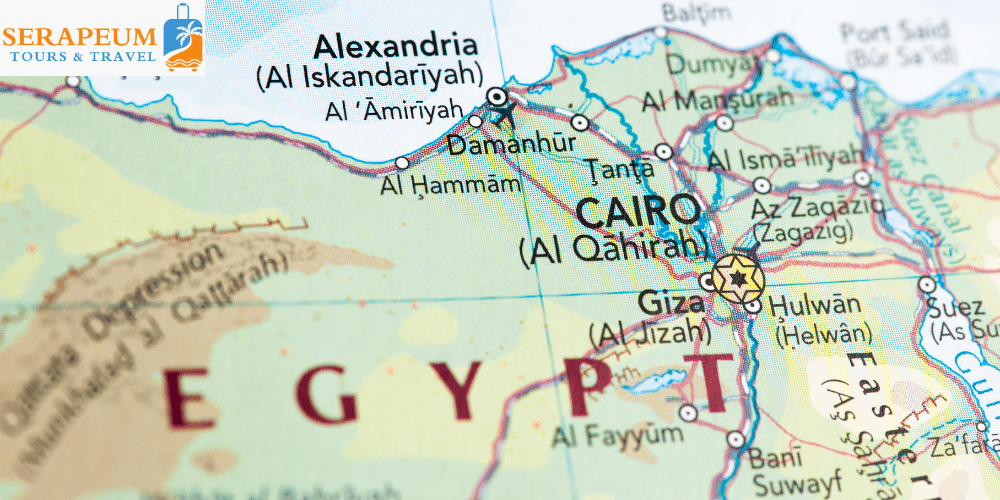
However, a day trip requires discipline. You cannot realistically explore every museum, archaeological site, beach, and neighborhood in a single day without rushing.
Best Day-Trip Strategy
Choose a maximum of four or five meaningful stops. A strong first-time route could combine the Catacombs of Kom El Shoqafa, Pompey’s Pillar, Qaitbay Citadel, the Bibliotheca Alexandrina, and part of the Corniche.
If food is important to you, leave enough time for a proper seafood lunch instead of eating between attractions. Alexandria is a destination where the meal itself can be part of the experience.
Stay overnight if you want a slower pace, beach time, more museums, evening walks, or a chance to experience Alexandria after the main sightseeing hours.
Alexandria in 2 Days vs 3 Days
| Trip Length | What You Can Comfortably Cover | Best For |
|---|---|---|
| 1 Day | Main archaeological highlights + Qaitbay + waterfront | First-time visitors with limited time |
| 2 Days | Major history + Bibliotheca + museums + Corniche + Montaza | Most travelers |
| 3 Days | Major sights + museums + beaches + food + slower exploration | Relaxed travelers and photographers |
For most international visitors, two full days is the sweet spot. It gives you enough time to see the major attractions without turning the trip into a race.
Three days becomes worthwhile if you enjoy museums, beaches, local food, photography, or simply prefer to travel slowly.
Nile Cruise vs Hotel: Where Does Alexandria Fit?
Alexandria is not primarily a Nile cruise destination. Its identity is tied to the Mediterranean rather than the Nile Valley cruise route.
This makes Alexandria particularly useful when planning a multi-destination Egypt itinerary. A typical route might combine Cairo for the pyramids and major museums, Alexandria for Mediterranean history and coastal culture, and Luxor or Aswan for the Nile Valley.
| Option | Main Experience | Alexandria Role |
|---|---|---|
| Alexandria Hotel | Coastal city experience | Best for 1–3 nights |
| Nile Cruise | River scenery and ancient sites | Better combined with Luxor/Aswan |
| Cairo Hotel + Day Trip | Efficient Egypt itinerary | Best for short trips |
How to Plan an Alexandria Trip
The easiest way to plan Alexandria is to start with the number of days you have, then build your route around geography. This avoids spending half the day crossing the city.
Step 1: Decide How Long to Stay
One day is enough for the major highlights. Two days allow a much more comfortable experience. Three days are ideal if you want beaches, museums, food experiences, and slower exploration.
Step 2: Group Attractions
Keep western historic attractions together where possible. Plan the Bibliotheca and central waterfront separately from Montaza and the eastern side of the city.
Step 3: Choose Your Accommodation Carefully
Location can save more time than a small difference in hotel price. A centrally located property may allow you to reduce transportation and spend more time actually exploring.
Step 4: Leave Space for the Unexpected
Alexandria is not a destination that needs to be experienced entirely through a checklist. Leave room for a café, a seafood lunch, a waterfront walk, or a neighborhood that catches your attention.
🌍 Planning Your Egypt Trip?
Planning your trip? Check our complete Egypt Travel Guide 2026: Everything You Need to Know .
You can also explore top destinations and travel ideas from our Egypt Travel Guide page.
Ready to organize your trip? Visit our Plan Your Egypt Trip page to get started.
Entry Requirements and Travel Preparation
Before traveling to Egypt, check the current entry requirements that apply to your nationality. Visa rules can differ between nationalities and may change, so travelers should verify requirements close to their departure date.
Passport validity, visa eligibility, entry procedures, and available visa options should be confirmed using current official information rather than relying on an old travel article.
For a broader preparation checklist, including entry planning and other practical information, see our Egypt Travel Guide .
People Also Ask: Alexandria Travel Guide FAQ
Is Alexandria worth visiting in Egypt?
Yes. Alexandria is especially worthwhile for travelers interested in Mediterranean scenery, Greek and Roman history, seafood, museums, and a different atmosphere from Cairo and the Nile Valley.
How many days do you need in Alexandria?
Two days is ideal for most travelers. One day covers the major highlights, while three days allow time for beaches, museums, food, and slower exploration.
Can you visit Alexandria from Cairo in one day?
Yes. Alexandria is practical as a Cairo day trip, particularly by train or organized private transportation. Start early and focus on a small number of major attractions.
What is Alexandria famous for?
Alexandria is famous for its ancient Greek and Roman heritage, the historic Pharos Lighthouse site, Qaitbay Citadel, the Bibliotheca Alexandrina, Mediterranean waterfront, and seafood culture.
What is the best time to visit Alexandria?
Spring and autumn are generally comfortable for sightseeing. Summer is attractive for travelers focused on beaches, while winter is cooler but wetter.
What are the best things to do in Alexandria?
Top experiences include visiting Qaitbay Citadel, the Bibliotheca Alexandrina, Catacombs of Kom El Shoqafa, Pompey’s Pillar, Kom El-Dikka, museums, Montaza, and walking the Corniche.
Is Alexandria safe for tourists?
Alexandria is a major city visited by tourists, but visitors should use normal urban precautions, protect valuables in crowded areas, use reputable transportation, and follow local rules.
Final Thoughts: Why Alexandria Deserves a Place on Your Egypt Itinerary
Alexandria is not simply another stop for travelers collecting ancient monuments. Its appeal comes from the way several layers of history and modern life exist together.
You can stand near the site of the ancient Pharos in the morning, explore Roman archaeological remains later, visit a modern cultural institution, eat fresh seafood, and finish the day beside the Mediterranean.
That combination is what makes the city different.
For a first visit, prioritize Qaitbay Citadel, the Catacombs of Kom El Shoqafa, Pompey’s Pillar, the Bibliotheca Alexandrina, the Corniche, and a good local seafood meal. If you have additional time, add museums, Kom El-Dikka, Montaza, and beach time.
Most importantly, do not plan Alexandria as a race. The city’s strongest moments often happen between the official attractions: a sea view, a local café, a busy street, a plate of seafood, or an unexpected architectural detail.
✈️ Ready to Explore Egypt?
Alexandria works beautifully as part of a wider Egypt itinerary. Combine the Mediterranean coast with Cairo, Luxor, Aswan, or other destinations according to your available time.
Explore Egypt ToursAlexandria Weather Month by Month
Alexandria’s Mediterranean climate is one of the reasons the city feels different from inland Egypt. Temperatures are generally moderated by the sea, but humidity, wind, and winter rain can affect how comfortable outdoor sightseeing feels.
The table below is designed as a practical planning guide rather than a promise of exact conditions. Actual weather can vary from year to year, so check the forecast shortly before traveling.
| Month | Typical Travel Feel | Best For | Planning Note |
|---|---|---|---|
| January | Cooler, occasional rain | Museums and history | Bring a light jacket and rain protection. |
| February | Cool to mild | Walking and sightseeing | Allow flexibility for rainy days. |
| March | Mild and increasingly pleasant | Outdoor sightseeing | One of the better months for long walking days. |
| April | Mild to warm | History, Corniche, photography | Good balance for a first visit. |
| May | Warm | Beach and sightseeing | Start outdoor visits earlier in the day. |
| June | Warm and increasingly humid | Coastal experiences | Carry water and plan breaks. |
| July | Hot and humid | Beach, sea views, evenings | Protect yourself from sun and heat. |
| August | Hot and humid | Beach-focused trips | Schedule archaeological sites earlier. |
| September | Warm and coastal | Beach and city sightseeing | Often a useful compromise between summer and autumn. |
| October | Warm to mild | Almost everything | Excellent month for a balanced itinerary. |
| November | Mild | History and walking | Pack a light layer for evenings. |
| December | Cooler, wetter possibility | Museums and cultural sites | Keep outdoor plans flexible. |
April, May, October, and November offer a particularly useful balance between comfortable sightseeing and Alexandria’s coastal atmosphere. Travelers with different priorities may prefer summer for beaches or winter for cooler temperatures.
Best Beaches in Alexandria
Alexandria’s relationship with the Mediterranean is central to its identity. The coastline stretches far beyond the historic center, and the beach experience can range from busy urban waterfronts to more resort-oriented areas.
Do not assume that every beach has the same access, facilities, water conditions, or atmosphere. Conditions and services can change by season, so check current local information before making a beach the centerpiece of your day.
Montaza and Eastern Alexandria
The Montaza area is particularly attractive for visitors who want to combine coastal scenery with gardens and historic surroundings. It works well as a slower second-day experience after visiting the city’s major archaeological attractions.
Urban Beaches
Beaches closer to the city can be convenient because they are easier to combine with restaurants, cafés, and other attractions. They may also be busier, especially during weekends and the summer season.
Further Coastal Areas
Travelers staying longer can explore beaches farther along the coast. These areas may feel less connected to the historic Alexandria experience, but they can be a better fit for visitors whose priority is swimming and relaxation.
If your main goal is historical sightseeing, do not sacrifice an entire day to reach a beach unless swimming is a major priority. Alexandria’s strongest value for first-time visitors is the combination of history, sea, food, and urban culture.
How to Experience Alexandria Like a Local
The most memorable Alexandria experience often begins after you stop treating the city as a list of attractions.
Take a walk along the Corniche without a fixed destination. Sit at a café. Watch the fishing boats and traffic around the waterfront. Try a local breakfast. Order seafood for lunch. Spend time in an older neighborhood rather than moving directly between tourist sites.
Alexandria rewards this slower approach because its character is not concentrated inside one archaeological complex. It is spread across the waterfront, streets, cafés, markets, museums, and everyday city life.
Try a Traditional Egyptian Breakfast
Start a morning with simple Egyptian staples such as ful and ta’ameya. This can be an inexpensive way to experience local food before spending the day at archaeological sites.
Make Time for Coffee or Tea
A café stop is not wasted sightseeing time. It gives you an opportunity to slow down and observe the city rather than constantly moving to the next attraction.
Eat Seafood at the Right Time
If seafood is important to your trip, make it a deliberate part of the itinerary. Ask about the available catch, preparation method, and price before ordering when seafood is sold by weight.
Watch Alexandria at Sunset
The Corniche becomes especially atmospheric toward evening. Rather than scheduling another distant attraction, consider keeping your final hour open for the waterfront.
Alexandria is one of those destinations where the spaces between attractions matter. A carefully planned itinerary should therefore include unplanned time. That is not inefficient travel; it is part of experiencing the city.
Shopping in Alexandria: What to Look For
Alexandria is not primarily a shopping destination, but browsing local shops and markets can add a useful cultural layer to your visit.
Travelers can look for Egyptian handicrafts, spices, traditional textiles, locally produced goods, souvenirs, and small food products. The best purchases are usually those that are easy to carry and have a clear connection to Egyptian culture.
What Makes a Good Souvenir?
- Small and easy to transport.
- Clearly connected to Egypt or Alexandria.
- Useful or meaningful rather than mass-produced clutter.
- Easy to pack safely in your luggage.
- Sold by a reputable shop when authenticity matters.
Compare prices before purchasing, especially in tourist-oriented areas. If an item is valuable or advertised as antique, ask for appropriate documentation and be cautious about exporting anything that may be protected by cultural heritage laws.
Photography Tips for Alexandria
Alexandria is an excellent destination for photographers because the visual story is not limited to monuments. Ancient stone, modern architecture, Mediterranean light, fishing boats, cafés, streets, and the Corniche create very different scenes within the same city.
Best Times for Photography
- Early morning: softer light and fewer crowds at major attractions.
- Late afternoon: warmer light around archaeological sites and the coast.
- Sunset: excellent for Corniche and Mediterranean scenes.
- Blue hour: useful for architectural images around the waterfront.
Respect Local Privacy
Always use common sense when photographing people. Ask permission when a person’s portrait is the main subject, particularly in intimate or personal situations.
Also follow restrictions at archaeological sites, museums, and sensitive locations. Photography policies can differ between attractions.
Accessibility and Travel With Children
Alexandria can be enjoyable for families, but the combination of traffic, uneven surfaces, archaeological areas, crowds, and long walking distances means that travelers should plan realistically.
Traveling With Children
Children may enjoy the combination of castles, underground spaces, sea views, boats, beaches, and local food. Avoid filling every hour with museums. Alternate historical attractions with open spaces and breaks.
Mobility Considerations
Travelers with limited mobility should check accessibility directly with each attraction before visiting. Historic and archaeological sites may contain stairs, uneven ground, narrow passages, or surfaces that are difficult for wheelchairs.
A private vehicle can make the overall trip easier by reducing unnecessary walking between attractions, although individual site accessibility still needs to be confirmed.
Responsible Travel in Alexandria
Responsible tourism is especially important in a historic city whose archaeological heritage is shared with the world.
- Do not touch or climb protected archaeological structures.
- Follow museum and attraction photography rules.
- Dispose of waste properly, especially around beaches and waterfront areas.
- Choose local restaurants and businesses when practical.
- Respect local neighborhoods and avoid intrusive photography.
- Do not purchase objects that may have been illegally removed from archaeological sites.
- Use licensed or reputable guides when booking guided archaeological visits.
Alexandria’s archaeological remains are fragile. A respectful visitor helps preserve the city’s heritage for the next generation of travelers.
Alexandria Travel Guide: Quick Facts
| Country | Egypt |
| Coast | Mediterranean Sea |
| Best Known For | Greco-Roman history, Mediterranean coastline, Qaitbay Citadel, Bibliotheca Alexandrina, seafood |
| Ideal First Visit | 2 days |
| Possible as Cairo Day Trip | Yes |
| Best General Seasons | Spring and autumn |
| Main Language | Arabic |
| Currency | Egyptian Pound (EGP) |
| Travel Style | History + Mediterranean coast + food + city exploration |
Final Alexandria Trip Planning Checklist
- ☐ Decide whether Alexandria will be a day trip or overnight stay.
- ☐ Choose your preferred travel season.
- ☐ Check current train or transportation schedules.
- ☐ Group attractions by location.
- ☐ Reserve accommodation if staying overnight.
- ☐ Check current opening hours and ticket information.
- ☐ Choose at least one seafood restaurant.
- ☐ Leave free time for the Corniche.
- ☐ Pack comfortable walking shoes.
- ☐ Check current Egyptian entry requirements for your nationality.
- ☐ Save your accommodation address and important travel information offline.
- ☐ Keep some flexibility for weather and traffic.
🌍 Build Alexandria Into a Bigger Egypt Adventure
Alexandria becomes even more interesting when it is connected logically with the rest of Egypt. Instead of treating each destination as a separate trip, build a route that balances ancient history, the Nile, Mediterranean culture, and time to relax.
Explore more destinations through our Egypt travel destinations and start organizing your itinerary with our Plan Your Egypt Trip resources.
🌍 Alexandria Is More Than a Day of Sightseeing
The strongest Alexandria itinerary combines its archaeological heritage with the Mediterranean coast, local food, museums, and time to simply experience the city.
For travelers continuing through Egypt, use the wider Egypt Travel Guide to connect Alexandria with the rest of your route.
When you are ready to turn the itinerary into an actual journey, explore Serapeum Tours for Egypt travel options and guided experiences.